
Cash vs. Accrual: Find the Best Fit for Your Business
Small Business, Accounting Methods, Cash vs. Accrual
Cash vs. Accrual Accounting: Which Method Is Right for Your Small Business?
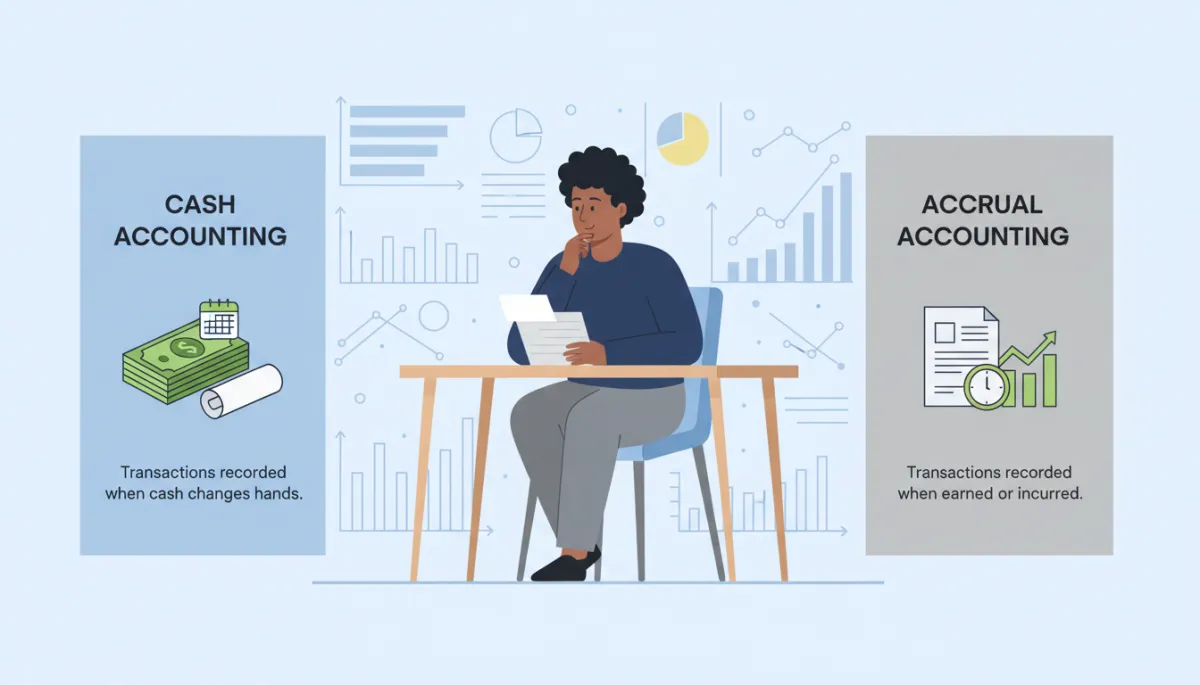
Cash basis accounting records money when it actually moves in or out of your bank account, while accrual accounting records income when it’s earned and expenses when they’re incurred—even if cash hasn’t changed hands yet. For most very small, cash-only businesses, cash basis is simpler. For growing businesses with invoices, inventory, or plans to seek funding, accrual accounting usually gives a more accurate picture and is often the better long‑term choice.
Choosing the right accounting method is crucial for small businesses, as it can significantly impact financial reporting and tax obligations. This article delves into the two primary accounting methods—cash basis and accrual accounting—highlighting their definitions, advantages, disadvantages, and guidance on selecting the most suitable approach for your business. Understanding these methods will empower you to make informed decisions that align with your financial goals. We will explore the implications of each method, the importance of professional advice, and how Cal The Bookkeeper can assist you in this process.
Cash vs. Accrual Accounting for Small Businesses
What is the difference between cash and accrual accounting? Cash basis accounting records revenues and expenses only when cash is actually received or paid, giving a simple, real-time view of cash flow. Accrual accounting records revenues and expenses when they are earned or incurred, even if cash moves later, offering a more complete view of financial performance over time.
Small businesses often face the dilemma of choosing between these two methods. Each method has unique characteristics and implications for financial management. Understanding these differences is essential for small business owners to select the method that best suits their operational needs.
Understanding the specific applicability and broader implications of each accounting method is crucial for small and medium-sized enterprises (SMEs).
Accrual vs. Cash Accounting: Applicability & Implications for SMEs
This study aims to determine which between the two methods of accounting, accrual or cash method, is more applicable to SMEs in Metro Manila. Accordingly, this study aims to determine the factors that influence SMEs in Metro Manila to apply the chosen accounting method. Some implications of using accrual and cash accounting are specified. This includes implications on qualitative characteristics of financial information, on income statements and balance sheet, on SMEs’ liquidity and profitability positions, and implications of using cash/modified-cash basis converted to accrual basis at year-end.
Application of accrual and cash accounting: Implications for small and medium enterprises in metro Manila, CP Cudia, 2008
Definitions:
Cash Basis Accounting:
What is cash basis accounting? Cash basis accounting is a method where revenues and expenses are recorded only when cash is exchanged. This approach is straightforward and easy to manage, making it ideal for small businesses with simple transactions. For instance, a business recognizes income when a customer pays for a service, and expenses are recorded when bills are paid. This method provides a clear picture of cash flow, which is crucial for managing day-to-day operations.
Accrual Accounting:
What is accrual accounting? Accrual accounting, on the other hand, records revenues and expenses when they are incurred, regardless of when cash is exchanged. This method provides a more accurate representation of a business's financial health, as it includes all earned income and incurred expenses. For example, a business recognizes revenue when a service is performed, even if payment is received later. This approach is beneficial for businesses that extend credit to customers or have significant inventory, as it aligns income and expenses with the period in which they occur.
Advantages and Disadvantages:
Cash Basis Accounting:
What are the pros and cons of cash basis accounting? Cash basis accounting offers several advantages, including simplicity and ease of use. It allows business owners to track cash flow effectively, making it easier to manage finances. However, it also has disadvantages, such as not providing a complete picture of financial performance, which can lead to misinformed business decisions.
Further research supports the notion that cash-based accounting can significantly reduce compliance burdens for small businesses.
Cash vs. Accrual Accounting: Impact on Small Business Compliance Costs
Using two surveys among (1) small businesses and (2) tax advisors, this study examines the effect of cash-based versus accrual accounting on tax and financial accounting compliance cost. While the results of the first study are ambiguous, the second study shows that cash-based accounting is associated with a decrease of external compliance costs of small firms by about 30%.
The effect of simplified cash accounting on tax and financial accounting compliance costs, K Blaufus, 2020
Accrual Accounting:
What are the pros and cons of accrual accounting? Accrual accounting provides a comprehensive view of a business's financial performance, which is essential for long-term planning. It allows for better matching of income and expenses, leading to more accurate financial statements. However, it can be more complex and may require more resources to manage, making it less suitable for very small businesses.
Moreover, the enhanced transparency offered by accrual accounting can be a significant advantage when seeking external financing.
Accrual Accounting Improves Small Business Access to External Funds
The findings show that the use of accrual accounting is associated with better access to external funds for small businesses, suggesting that accrual accounting provides more transparent and reliable financial information that lenders value.
Accrual accounting and access to external funds: Evidence from small businesses, PK Hong, 2025
Guidance on Choosing the Right Method:
How do you choose between cash and accrual accounting? When selecting an accounting method, small business owners should consider several factors, including the nature of their business, the complexity of their transactions, and their financial reporting needs. It's essential to evaluate the stage of the business, as startups may benefit from the simplicity of cash basis accounting, while growing businesses might require the detailed insights provided by accrual accounting. Consulting with a financial professional can provide valuable guidance tailored to your specific situation.
💡 Pro Tip: If you invoice customers, carry inventory, or plan to seek loans or investors, ask your advisor whether switching to accrual accounting now will make future reporting and funding easier.
For personalized advice on selecting the right accounting method, consider reaching out to Cal The Bookkeeper, a specialized bookkeeping and financial services provider focused on helping small to medium-sized businesses manage their finances efficiently.
About Cal The Bookkeeper

With over 15 years of bookkeeping experience, Calicia Landry is an Intuit Quickbooks Gold Level Pro Advisor and a Certified Intuit Quickbooks Payroll Pro Advisor. Her personalized approach focuses on building strong, long-term partnerships and understanding each business' unique needs. You can learn more about Calicia and connect with her on LinkedIn.
What Is Cash Basis Accounting and How Does It Benefit Small Businesses?
What is cash basis accounting and who is it best for? Cash basis accounting is a straightforward method that records income and expenses only when cash is exchanged. This simplicity makes it particularly beneficial for small businesses that may not have complex financial transactions. The primary advantage of this method is its ease of understanding and management, allowing business owners to maintain a clear view of their cash flow. This method is especially useful for businesses that operate on a cash-only basis, as it provides immediate insights into available funds.
What Is Accrual Accounting and Why Is It Important for Growing Businesses?

Why is accrual accounting important for growing businesses? Accrual accounting is essential for growing businesses as it provides a more accurate picture of financial health. By recognizing revenues and expenses when they are incurred, businesses can better match income with the expenses associated with generating that income. This method is particularly important for businesses that offer credit to customers or have significant inventory, as it allows for more informed decision-making and financial planning. Understanding accrual accounting is crucial for businesses aiming for growth and sustainability.
How Do Tax Implications Differ Between Cash and Accrual Accounting?
How do taxes differ under cash vs. accrual accounting? The tax implications of cash and accrual accounting can vary significantly. Cash basis accounting allows businesses to defer income recognition until cash is received, which can be advantageous for tax purposes. Conversely, accrual accounting requires businesses to report income when earned, regardless of cash flow, which can lead to higher tax liabilities in the short term. Understanding these differences is vital for effective tax planning and compliance.
Accounting Method Income Recognition Expense Recognition Tax Implications
Cash Basis When cash is received When cash is paid Can defer income
Accrual When earned When incurred Report income immediately
This table illustrates the fundamental differences in income and expense recognition between cash and accrual accounting, highlighting their respective tax implications.
Accounting Method When Income Is Recognized When Expenses Are Recognized Cash Flow View Financial Accuracy Typical Users
Cash Basis When cash is actually received from customers When cash is actually paid to suppliers or for expenses Very clear, focuses on money in and out of the bank Limited, may not show all revenues earned or expenses incurred Very small businesses with simple, cash-only transactions
Accrual When revenue is earned, even if cash is received later When expenses are incurred, even if paid later Less immediate, because timing is not tied to cash High, provides a complete picture of performance over time Growing businesses, those with inventory, credit sales, or external funding needs
Which Accounting Method Should Your Small Business Choose?
Which accounting method is best for small businesses? Choosing the right accounting method depends on various factors, including the size of the business, the complexity of transactions, and financial reporting needs. Small businesses with straightforward cash transactions may find cash basis accounting more manageable. In contrast, businesses with more complex financial activities, such as inventory management or credit sales, may benefit from the detailed insights provided by accrual accounting. Evaluating these factors will help business owners make informed decisions that align with their operational goals.
How Can a Decision Flowchart Help You Select the Right Method?
A decision flowchart can be a valuable tool for small business owners when selecting an accounting method. By outlining the key considerations and questions to ask, a flowchart can guide business owners through the decision-making process. Factors to consider may include the nature of the business, the volume of transactions, and the need for detailed financial reporting. This visual aid can simplify the selection process and ensure that all relevant aspects are considered.
How Can Cal The Bookkeeper Support Your Accounting Method Decision?
How can a bookkeeper help you choose cash or accrual accounting? Cal The Bookkeeper offers personalized bookkeeping services that can assist small businesses in selecting the most appropriate accounting method. With expertise in both cash and accrual accounting, Cal The Bookkeeper can provide tailored advice based on your specific business needs. Their services include financial consultation, helping you understand the implications of each method and how they align with your business goals.
What Personalized Bookkeeping Services Does Cal The Bookkeeper Offer?
Cal The Bookkeeper provides a range of bookkeeping services designed to support small to medium-sized businesses. These services include:
Financial Reporting: Comprehensive reports that provide insights into your business's financial health.
Tax Preparation: Assistance with tax compliance and planning to optimize your tax obligations.
Cash Flow Management: Strategies to improve cash flow and ensure financial stability.
These services are designed to help business owners focus on their core operations while ensuring their financial management is in expert hands.
How to Schedule a Free Consultation for Tailored Financial Advice?
Scheduling a free consultation with Cal The Bookkeeper is a straightforward process. Interested business owners can reach out to discuss their specific needs and explore how personalized bookkeeping services can benefit their operations. This consultation provides an opportunity to receive tailored financial advice and determine the best accounting method for your business.
By understanding the differences between cash and accrual accounting, small business owners can make informed decisions that align with their financial goals. With the support of professionals like Cal The Bookkeeper, navigating these choices becomes more manageable, ensuring that your business remains on a path to success.


